Le loto
Tentez votre chance ! (Try your luck!) Today we are talking about the loto.
Finally, you might enjoy the following story about a loto game in France (blogpost in English) :
https://ourlittlehouseinfrance.wordpress.com/2013/04/08/lotto-our-french-bingo-experience/
When people in France talk about jouer au loto, they can mean two things : either the National Lottery, which is drawn every night or so on TV (here's a random example), or a more traditional game that resemble the American bingo. The latter is also called loto traditionnel, quine or loto bingo, depending on your region. (I'm from the South-East and I've always called it "loto".)
Organizing loto evenings is a great way for associations, towns and villages to raise money. They can take place year-round, but they are particularly frequent around Christmas. The prizes are usually donated by local businesses.
Here is a TV news report about one of those events in the town of Saint-Sauveur, in the South-West of France:
I handed out in class a transcript of the video, with accompanying vocabulary.
Each one of the cards used to play loto is called un carton. You need at least one to play, but people usually buy more than one to increase their chances of winning. A carton is a 3 line x 9 column grid, with 15 random numbers between 1 and 90 written on it, and a few blank spaces. As the game master calls out numbers, players cover the corresponding numbers on their carton with a bean (traditionally) or a plastic chip (nowadays). The first player to cover all 5 numbers in a line wins a "quine" (or "ligne") and needs to call out before the game master announces the next number. The first player to cover two lines in the same carton has a "double quine", and the first one to fill all three lines in the same carton wins the "carton plein".
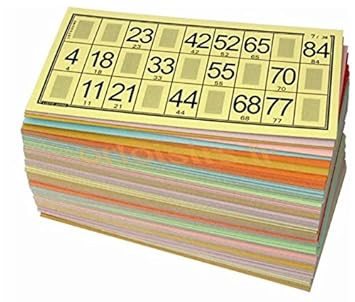
I couldn't find French loto cartons, so I printed some Brittish Bingo cartons (which also go from 1 to 90) from this website.
Finally, you might enjoy the following story about a loto game in France (blogpost in English) :
https://ourlittlehouseinfrance.wordpress.com/2013/04/08/lotto-our-french-bingo-experience/
Comments
Post a Comment